In this blog, we hear from Lucy Ireland, Quality Improvement Lead and Speech and Language Therapist at Elysium who plays a vital dual role—delivering high-quality therapy while also mentoring colleagues and shaping service development. Lucy has helped build a robust, patient-centred model of care for people with complex communication and swallowing needs, often following brain injury. Passionate about both clinical excellence and professional growth, she shares how her work goes beyond traditional therapy—training staff, supporting quality improvement projects, and contributing to strategic decisions. Her story offers a powerful insight into what it means to be a valued SLT within a forward-thinking organisation.
Tell us a bit more about your role.
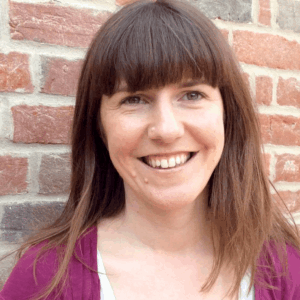 I am a Quality Improvement Lead and a Clinical Specialist Speech and Language Therapist at the Avalon Centre which is a neurobehavioral rehabilitation hospital in Swindon.
The reality is that I am a clinician first and I always will be because I’m really proud to be a speech therapist. I’m a mentor, which is kind of partly why Quality Improvement (QI) is something that really appeals to me. In terms of being a speech therapist, I’m a specialist speech therapist for acquired neurological conditions, which is the area that I’ve always been involved with since qualifying 20 years ago.
At Avalon, we use a transdisciplinary team approach, where all roles support each other to ensure service users remain at the heart of care.
So that’s my first thing, but that’s not all I do. Within the neurological division, I am the Lead Speech Therapist for our division. That means that I’ve been part of developing the speech therapy forum, so I’m Co-chair of that forum, which meets regularly throughout the year.
I serve as the Lead Speech Therapist for the neurological division and Co-chair the Elysium Speech Therapy Forum—a space for therapists to connect, share best practices, and collaborate across the organisation. I also represent speech therapy on the Allied Healthcare Professional (AHP) Council, ensuring our voice is heard at a senior level.
I’ve been in Quality Improvement (QI). I help teams turn complex challenges into measurable, positive changes for both staff and service users. Over the past few years, we’ve delivered a number of successful QI projects that have inspired similar initiatives across other Elysium sites.
Finally, I’m part of the hospital’s senior management team, contributing to strategic service development and ensuring our therapeutic focus remains strong within a psychology-led model. I love the variety in my role—it’s the perfect blend of clinical work, leadership, and continuous improvement.
How did you get into speech and language therapy?
When I was at school I completed a careers questionnaire called the Morrisby test and it came out with Speech and Language Therapist, which is bonkers. I then forgot about that, went to the University of Edinburgh and did my undergrad, which was an MSE in English Language and linguistics.
Then I worked for a charity called Headway where I supported a few people, but one lady in particular, to get back her confidence into being in the community after acquired brain injury. I then did a post grad in Speech Therapy at City University in London, so that was a two year conversion course and that was 20 years ago this summer. So I’ve been qualified and worked as a speech therapist for the last 20 years.
A lot of my placements initially were in various trusts across London, but particularly King’s College Hospital and I had placements with neurosciences and neurology there that I found really inspiring. So I knew that that was the area I wanted to work in. My first newly qualified job was within the NHS in East Anglia for 10 to 15 years.
And during that time, I had my children but also wanted to look at expanding my skill set. I’m a bit of a nerd. I felt I needed another degree. Two wasn’t enough. I went back on a part time basis to do an MSC in Health and Medical Sciences at UCL in London. I did that alongside working, and that was brilliant because I was the only speech therapist on the course. It was really interesting in terms of teaching and learning in a medical setting, research methods, thinking about quality improvement in healthcare and all those kind of things.
Then my family and I relocated back to the Southwest and then a job landed in my inbox, that there was a new brain injury hospital opening in Swindon, which was the Avalon Centre, so I sent in my CV, got the job and have never looked back.
Have you done any training/ further development with Elysium Healthcare?
Yes so when I joined the Avalon Centre just before Covid, we had 6 weeks really intense dedicated induction. Because of the nature of it being a neuro behavioural service, Elysium were really keen to have us all at a unified starting point to make sure we all hit the ground running, that we had the same outlook. That’s also been enhanced with MEL (internal learning platform), mandatory training and annual refreshers.
I’ve attended internal and external conferences and training courses to maintain and develop my clinical skills. Within the last 12 months I have attended a 2 day Qi mental training course, which was brilliant because it allowed me to meet other people across Elysium that are in similar roles to me. It allowed us to connect and now we all catch up monthly on Teams.
In early June, last year was the first the company’s first Qi conference. I presented a workshop at that conference and supported my colleagues with their projects to each submit a conference poster. And then similarly, Elysium had its first AHP conference in January of this year, which was spearheaded by Jenny Kirkland (Chief Nurse).
Again, I presented at that, both in terms of just an update on what the hot topics for speech therapy are and our priorities within our forum along with some of my peers.
Then just a few weeks ago, I was at the Nurse Conference as an AHP representative, it was really good to learn about nursing within the business. A lot of the information was relevant and transferable and gave me some direction on conversations that I might have with nurses within our team at The Avalon Centre.
What is it like to be a Speech and Language Therapist at Elysium?
I think what I love about it, and it would vary depending on the therapist and experience and the site that they work in. But for me being a speech therapist at Elysium is autonomous, innovative and supportive, and those are three really important things for me.
Obviously we are governance and policy lead but there’s a lot of freedom in terms of thinking about a particular site or particular patients’ needs so that we can be flexible and adapt to challenges and opportunities at our site, which we probably have more freedom than I had when I worked within other healthcare companies. I really like that. Similarly, it can be quite innovative. You can have a good idea, demonstrate that that’s going to be safe and enact that idea quite swiftly.
I think what’s changed in the last few years is that Elysium has become much more supportive and connecting and recognising AHP’s, we’re a small but very important part of the company.
And the fact that we’ve got the form in place that we’ve got clinical supervision, that we’ve got different meetings happening and conferences that are specifically for AHP’s, helps people feel more invested and they can see that their own development as well as that of the services they work is really important.
What’s it like working at the Avalon Centre?
I love working at the Avalon Centre. You don’t get two days the same ever. It’s quite different to some other ‘traditional’ private neuro rehab hospitals and neuro rehab services.
We work completely as a transdisciplinary team. So when I’m working as a Speech Therapist within the team, I’ll assess an individual, perhaps do a clinical evaluation of their swallowing at lunchtime and over a number of days, connect with the team about that, put in place a care plan with clear recommendations developed with the patient themselves and their family as well. Then that will be imparted to the whole team to enact. So it’s not the case that as a speech therapist, I deliver that every single day. But actually the team take ownership for those care plans and for the delivery.
Likewise, perhaps you’re supporting somebody with their cooking well, it might well be that as a speech therapist, I’m supporting somebody doing cooking in the kitchen or going out into the community rather than it just being an Occupational Therapist’s job. So it’s quite different in that we take that kind of blurred shared responsibility.
It’s quite physically demanding job in that you’re working with people that can at times can be quite agitated and can be aggressive, so you need to be mindful of that and be responsive to it and be supportive towards yourself, your colleague and your patients.
I’m lucky within Elysium that I work jointly with another speech therapist here. So she’s now our therapy lead. We’ve both got a similar level of experience in terms of speech therapy, which means we’re able to offer a really robust model here in terms of speech therapy.
You mentioned that you do some mentoring, tell us more about that?
So as a speech therapist, we have our clinical responsibility and accountability to support people with communication difficulties, swallowing difficulties or feeding difficulties.
Now part of that responsibility and accountability means that everybody within the team needs to be equipped with the right skills to be able to support people. And be our eyes and ears as well. So when I’m looking at the speech therapy aspects, we are training as part of induction, a session that talks about how in our particular service with individuals following brain injury, who have behaviours that challenge. How to support them in a safe way to ensure we are providing quality care. We also make sure that we’re supporting people on a refresher basis, so once a year, everybody attends that training again to make sure that they’re up to date with how to help specific patients that are at our hospital. So that’s in with regards to speech therapy at Avalon.
So then as part of my Qi role I support and mentor all of the different project leads with their Qi projects and I present at the monthly Neuro Qi Hub meetings, at the monthly clinical network meetings, at the various conferences and that would be to a variety of roles.
Would you recommend Elysium to prospective Speech and Language therapists and why?
Absolutely I would. I think if you’re looking to work somewhere where you can be more autonomous, innovative but supported then I would recommend Elysium. It’s different from anywhere I’ve worked before. There’s opportunities to develop, access to support and you get to expand your clinical skills while still focusing on patient care.
You have the opportunity to be within a network of other professionals. AHP’s are considered a valued part of the team of the company. You’re not just a bolt on. You are integral to a team.
You know, looking at my hospital as an example, which obviously is just one site, but you’ve got speech therapists in really important roles within the senior management team. So opportunities not just to be a clinician, but actually to be involved with some of those strategic roles, which perhaps in other companies or in NHS perhaps aren’t as open. You know that that’s quite different and I think that demonstrates how the company views each individual skill set rather than just packaging you off into one particular area.
Elysium offers more than just a job—it’s a place where speech and language therapists can thrive, innovate and truly make a difference. With a strong focus on collaboration, ongoing development, and respect for each professional’s unique expertise, it’s a supportive environment where therapists are empowered to grow both clinically and professionally. For those looking to be part of a forward-thinking, inclusive team—this is a place where your work truly matters.