At Elysium, we believe that mental health support isn’t just for our service users, but our colleagues too. Working in healthcare and mental health services is an incredibly meaningful and inspiring career path and we know that supporting those who care for others is just as vital. That’s why we place wellbeing at the heart of everything we do, creating a culture where every individual feels valued, supported and empowered.
Mental Health First Aiders play a key role in this. They’re often the first line of support, offering to listen, recognising the signs of distress and guiding people towards the help they need. They help create a safe environment where people feel able to open up without fear of judgement. Mental Health First Aiders don’t replace professional services, but they bridge the gap, ensuring no one feels alone in moments of struggle.
That’s why Elysium is investing in Mental Health First Aiders across all our sites, to continue building a culture where everyone feels seen, supported and safe. In this blog, Natalie Newton, Regional Training Manager and now Mental Health First Aid (MHFA) Instructor, shares her journey into why she chose to train as an instructor, why MHFA is so vital at Elysium, how the initiative is being rolled out across our services and the critical importance of self-care in sustaining this role.
Why have become a mental health first aid instructor?
Mental health is something I’ve always been passionate about, both in my personal life and in the work I do every day. I work predominantly in our mental health services and I watch all my colleagues show up for our service users with care and compassion, but I believe it’s just as important that we show up for our colleagues too.
When I first decided to become a Mental Health First Aider, it wasn’t just about the training or the qualification. It was about being someone others could turn to as a non-judgemental, empathetic listener. I’m not a therapist and I don’t diagnose, but I am someone who cares deeply. It’s about real communication and being present, being respectful and creating a space where someone feels safe to open up. Sometimes people just need someone to sit with them.
I’ve since gone on to train as a Mental Health First Aid Instructor because I want to empower others to step into this role as well.

Why is Elysium rolling out the scheme to train staff members to become metal health first aiders?
At Elysium, we recognise that supporting mental health in the workplace isn’t just about our service users, it’s just as vital for our colleagues too. That’s why we’re working to roll out Mental Health First Aiders (MHFA) across all of our sites, ensuring fair representation and accessible support for everyone, regardless of location or role. Elysium’s Lucie Portas, Chief People Officer and Andy Wadley, Director of NHS Contracts and Integrated Systems/Sustainability Lead, are committed to driving the MHFA strategy forward throughout Elysium.
We want this initiative to reflect the needs of each service, so rather than concentrating support in one area, we’re taking a balanced approach, making sure we have representatives across sites and shift patterns. While clinical staff like nurses and psychologists already have a strong foundation in mental health awareness, this initiative is focused on non-clinical colleagues from healthcare assistants to administrators, because everyone deserves to feel supported.
As an MHFA instructor, I know that creating lasting change doesn’t happen overnight. It’s not about delivering one course and thinking everything will shift immediately. It’s about building a consistent, compassionate framework that evolves with us.
“The course was well organised and it was a great group of people. Both tutors were very knowledgeable about what they were teaching, and excellent in their delivery. I have benefitted from the knowledge and guidance taught. I will take this forward to support my colleagues” – Elysium Employee Review of MHFA Course
How do you plan to support Mental Health First Aiders across the organisation?
Looking after our Mental Health First Aiders (MHFAs) is just as important as the support they provide to others. It’s something I feel strongly about, because while the role is incredibly valuable, it can also be emotionally demanding.
We already have an existing Mental Health First Aid (MHFA) Committee that is already in place, and the planned expansion to include MHFA-trained staff representatives from each region. Initially, one representative per site will be nominated by the Operational Directors. The idea is to have a representative from each site who can act as a local point of contact, share experiences and ensure that mental health support is consistent and collaborative across the organisation.
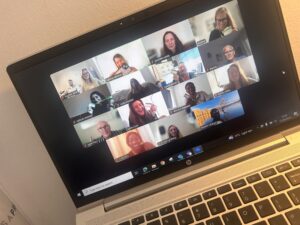
Alongside this, I’d love to launch regular virtual coffee mornings. While I’m a big fan of Teams, it’s efficient, saves time and travel and helps us stay connected, sometimes sensitive topics deserve more space than a standard online meeting. These coffee mornings would provide a more relaxed, open forum for MHFAs to check in, share challenges and feel supported by one another.
Further down the line, I’d also like to invite guest speakers to some of these sessions, people who can offer deeper insights into specific mental health topics that we cover during training, helping to broaden understanding and keep our knowledge fresh and relevant.
” Excellent course. I did not realise how ill-equipped I was to support a person having a mental issue prior to this course. The training was informative, comprehensive and increased my skills & understanding. I feel more confident in my ability to support staff, and I feel that I have an increased awareness of the issues that impact on people’s mental wellbeing.” – Elysium Employee Review of MHFA Course
Why is self-care so important for Mental Health First Aiders?
During the MHFA instructor course, there’s a section called ‘Self-Care Bingo’, an activity designed to help participants reflect on their own wellbeing practices. As I worked through it, I had a moment of realisation that I don’t actually do any self-care. As a single mum, I’d always prioritised everyone else’s needs. But this activity made me pause and really think, how can I care for others if I’m not looking after myself?
Self-care isn’t a luxury, it’s essential, especially in roles like MHFA, where you’re often supporting others through emotionally challenging times. Since then, I’ve made it a priority. One of the small changes I’ve made is creating a quiet space just outside my kitchen window. I bought a little swivel chair and set up some solar lights. Every evening, I spend 10 minutes there with a cup of tea, just unwinding. It’s a small ritual, but it’s made a big difference.
The truth is, we can’t pour from an empty cup. If we don’t take care of ourselves, we can’t show up fully for others.
“This course is really useful to teach staff how to assist each other and provide information to signpost to the right support. I found it really enjoyable and i learned lots of new techniques and improved my understanding of MHFA. This was well delivered with great discussions and just a the right balance of humour and seriousness.” – Elysium Employee Review of MHFA Course
What makes a good Mental Health First Aider?
Being a Mental Health First Aider is a lot to do with the person you are and the mindset you bring to the role. While having personal experience with mental health challenges can help you relate more deeply, it’s by no means a requirement. What truly matters is your ability to show up with empathy, honesty and compassion.
You need to be someone who can listen without judgment. Trustworthiness, authenticity and a calm, supportive presence go a long way. It’s not necessarily about being a perfect communicator but about having the confidence and emotional intelligence to handle difficult conversations and offer support in a sensitive, respectful way.
Mental Health First Aid can be emotionally demanding. It’s important for anyone considering the role to reflect seriously on whether they’re ready to hold that space for others. Supporting someone in crisis or distress can take a toll, so it’s crucial to be aware of your own limits and wellbeing too.
So, if you’re thinking about taking on this role, ask yourself: Can I hold space for others without needing to take control? Can I offer support without judgment? If the answer is yes, you might be exactly the kind of person we need.
If you want to join an organisation that supports wellbeing and cares deeply about not only service users but their employees, then Elysium could be the place for you. Click here to explore opportunities to join the team and be part of something meaningful.